Inside the Galveston Bay Refinery: America’s Largest Oil Refining Operation
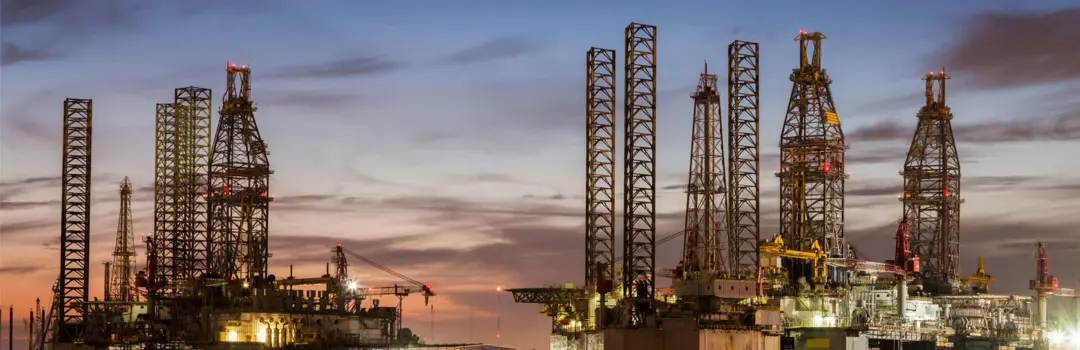
At 1:20 p.m. on March 23, 2005, a hydrocarbon vapor cloud ignited at the BP Texas City refinery, detonating with enough force to shatter windows three-quarters of a mile away. 15 workers were killed, all of them contractor employees stationed in temporary office trailers, some of which were just 121 feet from the blast source. Another 180 workers were injured. A shelter-in-place order went out to 43,000 residents, and property damage ultimately totaled roughly $200 million.
It was the deadliest U.S. refinery disaster in more than a decade, and it happened at a facility that was, at the time, generating about $100 million a month in profit. Over two decades later, the explosion is widely seen as a turning point in both the refinery’s trajectory and the industry as a whole. It led to billions of dollars in fines, settlements, and safety overhauls. It catalyzed industry-wide reforms to process safety management. And, ultimately, it contributed significantly to BP's decision to sell the refinery.
Two decades later, that same facility—now under different ownership, with billions in new investment and significant safety upgrades—is the largest oil refinery in the United States. Currently, the Marathon Galveston Bay Refinery processes 631,000 barrels of crude oil every day, producing the gasoline, diesel, jet fuel, and petrochemicals that keep a large share of the American economy moving.
From Standard Oil to Marathon: Nine Decades on Galveston Bay
Today, the Marathon Galveston Bay Refinery is Texas City's single largest employer, with approximately 1,550 full-time workers and thousands more contractors cycling through. The refinery and the broader industrial complex it anchors, which includes operations by Valero, Dow, INEOS, and Eastman Chemical, form the largest industrial tax base in Galveston County. It’s a critical piece of the Gulf Coast energy corridor, which produces nearly half of all the refined fuel in the United States.
In other words, it’s big.
But this facility wasn't always the industrial giant it is today. With a history that spans more than 90 years, the Marathon Galveston Bay Refinery has seen a lot of changes—for better and for worse.
1933
In 1933, Pan American Refining Corporation (a subsidiary of Standard Oil of Indiana) built a refinery on the shores of Galveston Bay. The location offered exactly what a major refining operation needed: deep-water port access, proximity to shipping lanes in the Gulf of Mexico, and a position at the entrance to the Houston Ship Channel, one of the busiest commercial waterways in the world. Texas City was already emerging as an industrial hub, and the new refinery fit naturally into the region's growing petrochemical infrastructure.
1954
Standard Oil of Indiana reorganized its refining subsidiary as American Oil Company (Amoco) in 1954. The Texas City refinery operated under that name for the next four decades, expanding steadily as American fuel demand grew.
1998
The first major ownership change came on December 31, 1998, when British Petroleum (BP) completed its acquisition of Amoco in a deal valued at roughly $48 billion to $53 billion. This marked the largest takeover of an American company by a foreign corporation at that time. As a result of the acquisition, the Texas City refinery became a BP asset overnight.
2005
The refinery would operate under BP's name for 14 years, a period that included both significant expansions to its processing capacity and the catastrophic 2005 explosion that would come to define BP's safety reputation in the United States. In the aftermath of that disaster, compounded by the 2010 Deepwater Horizon oil spill, BP began divesting assets to manage its financial and legal exposure.
2013
On October 8, 2012, Marathon Petroleum announced an agreement to purchase the Texas City refinery. The deal closed on February 1, 2013, for approximately $2.4 billion. At the time, Marathon already operated a smaller, adjacent refinery in Texas City, the former "Bay Plant," which the company had acquired in 1962.
2018
In 2018, Marathon merged the two facilities into a single integrated complex and rebranded it the Galveston Bay Refinery.
2023
Five years later, the completion of the $1.2 billion South Texas Asset Repositioning (STAR) program in April 2023 added 40,000 barrels per day of crude capacity. Now producing 631,000 barrels of crude oil per day, this cemented the facility's position as the largest refinery in the country.
What 631,000 Barrels a Day Actually Looks Like
The Galveston Bay Refinery is massive, both in terms of actual size and productivity. Covering approximately 1,200 acres, a span of about four miles, the complex comprises several, formally stand-alone facilities. The refinery produces about 631,000 barrels of crude oil, or more than 26 million gallons, every single day.
But it’s not just about quantity.
Refineries are rated according to their ability to take heavy, sour crude and process it into lighter, more valuable products, such as gasoline or diesel. This system is known as the Nelson complexity index (NCI). The higher a refinery’s NCI rating (on a scale of 1–20+), the greater its capability of turning low-quality crude oil into profit-generating outputs. In other words, a high NCI rating typically translates to a more sophisticated and profitable facility.
The Galveston Bay Refinery carries a Nelson Complexity Index of 15.2. In practical terms, this isn't a simple operation that boils crude oil and separates it into components. Instead, Galveston Bay can take cheaper, heavier, more difficult-to-process crude, including heavy sour grades, and upgrade it into high-value light products, like premium gasoline and ultra-low-sulfur diesel. That flexibility allows Marathon to shop for the most cost-effective crude on the global market and still produce top-tier fuel.
The refinery houses dozens of interconnected processing units that heat, crack, treat, and blend crude oil through multiple stages before it becomes a finished product. These include:
- Distillation towers that separate crude into its basic components
- Catalytic crackers that break heavy molecules into lighter ones
- Hydrotreaters that remove sulfur and other impurities
- Coking units that squeeze remaining value out of the heaviest residual material
Several new units were completed in 2023 as part of the STAR program, designed to meet updated EPA gasoline sulfur standards.
Crude oil reaches the refinery primarily through the Wink-to-Webster Pipeline, a 650-mile line that delivers crude from the Permian Basin in West Texas. The facility also receives crude via ocean tanker and barge through its Galveston Bay marine terminals. Once processed, finished products leave through pipelines (including connections to the Colonial Pipeline system, which serves the U.S. Southeast and East Coast), barge, ocean tanker, rail, and truck.
The refinery even has its own power plant. The on-site cogeneration facility generates 1,055 megawatts of electricity, which is enough to power a mid-sized American city. The refinery uses roughly half; the rest is sold to the grid.
What Comes Out the Other End
The product slate from Galveston Bay touches nearly every corner of the petroleum market. The refinery produces gasoline in all grades, ultra-low-sulfur diesel, jet fuel, natural gas liquids, propane, heavy fuel oil, aromatics (benzene, toluene, and xylene for petrochemical feedstocks), refinery-grade and chemical-grade propylene, fuel-grade petroleum coke, and elemental sulfur.
Those products feed an enormous distribution network. Marathon supplies approximately 7,300 independently owned retail outlets under the Marathon and ARCO brands. Plus, Galveston Bay's position on the Gulf Coast makes it a critical export hub. Tankers carry refined products to Florida, the Eastern Seaboard, Mexico, and international markets. Marathon's company-wide export volumes reached 370,000 barrels per day in 2024. The United States has been a net exporter of refined petroleum products since 2010 and is now the world's largest, with Gulf Coast refineries like Galveston Bay helping to drive that surplus.
March 23, 2005: The Explosion That Changed an Industry
For all its scale and history, the moment that defined this refinery in the public consciousness was a routine startup gone terribly wrong. On March 23, 2005, operators were refilling the unit's raffinate splitter—a 170-foot distillation tower—with hydrocarbons after a maintenance shutdown. But critical level instruments were not working properly. No one had calibrated the process control level transmitter, and an independent high-level alarm switch failed to activate. The sight glass, which should have shown liquid levels inside the tower, had gone opaque. Operators believed the liquid level inside the tower was below nine feet. It had actually risen to 158 feet in a tower only 170 feet tall.
When operators opened a drain valve and increased heat to the column, the sudden vaporization inside the overfilled tower sent a surge of hot hydrocarbons through the relief system and into a blowdown drum and stack, a 1950s-era atmospheric venting system that was never designed to handle a vessel overfill of this magnitude. More than 51,900 gallons of heated raffinate overwhelmed the system in approximately six minutes, erupting from the top of the 113-foot stack in a geyser of flammable liquid. The pooling hydrocarbons formed a massive vapor cloud at ground level, which then ignited, likely by a diesel pickup truck idling nearby.
The U.S. Chemical Safety and Hazard Investigation Board (CSB) launched one of the most extensive industrial accident investigations in American history, deploying 13 investigators who spent three months on-site, reviewed more than 30,000 documents, and interviewed 370 witnesses. Their 341-page final report, released in March 2007, found failures at nearly every level of the organization.
The Galveston Bay Refinery Explosion by the Numbers
Between 1994 and 2004, at least eight similar flammable vapor releases had occurred from the same blowdown system, two of which caused fires. No corrective actions were taken.
An opportunity to replace the atmospheric venting system with a safer enclosed flare was rejected over a $150,000 cost difference.
The day-shift board operator was working his 30th consecutive 12-hour shift.
After the 1998 merger, BP had ordered 25% cuts in operating costs, achieved in part through reductions to maintenance budgets, training programs, and safety staffing.
Internal studies commissioned between 2002 and 2005, including a report by the Telos Group delivered just two months before the explosion, had identified severe safety deficiencies at the refinery. Those warnings reached BP executives in London but did not prompt adequate action.
Consequences, Reforms & the Baker Panel
The financial and legal consequences were staggering. OSHA imposed a $21 million fine in September 2005 (a record at the time) for 301 “process safety management” violations. It then proposed an additional $87.4 million in penalties in 2009 after finding BP had failed to implement required safety improvements.
BP Products North America pleaded guilty to federal environmental crimes under the Clean Air Act, paying a $50 million criminal fine. Civil litigation from approximately 4,000 claimants resulted in settlements estimated at roughly $2.1 billion. All told, the total financial fallout reached approximately $2.5 billion, making it the costliest refinery accident in history.
But perhaps the most lasting consequence wasn’t financial. In the aftermath of the explosion, BP commissioned an independent review panel chaired by former Secretary of State James A. Baker III. The Baker Panel's 374-page report, released in January 2007, delivered a finding that would reshape industrial safety thinking across the petroleum sector: BP had focused extensively on personal safety metrics (things like slips, trips, and falls) while systematically neglecting process safety, the discipline that prevents the kind of catastrophic equipment failures and explosions that kill multiple people at once. The panel found significant process safety culture deficiencies at all five of BP's U.S. refineries, not just Texas City.
The ripple effects extended far beyond BP. The American Petroleum Institute revised and created new standards, including API RP 753 (safe placement of portable buildings near process units), API RP 754 (process safety performance indicators), and API RP 755 (fatigue risk management for refinery personnel). OSHA launched a national emphasis program on refinery process safety management.
What Changed (and What Didn’t) Under Marathon
Before BP sold the Texas City refinery, it had already invested approximately $1 billion in safety improvements over a period of about five years. That included eliminating all the blowdown drum and vent stack systems in flammable service and replacing them with modern enclosed flare systems. It also included moving more than 200 temporary structures that were in close proximity to process units and standardizing pre-startup safety reviews, mandatory supervisor presence during startups and shutdowns, and written shift handover procedures.
After acquiring the facility in 2013, Marathon announced plans to invest approximately $1.6 billion in upgrades to the refinery, encompassing both operational improvements and safety and regulatory investments. The company implemented mandatory contractor training programs, established stop-work authority for all employees, and developed advanced data-tracking systems for process safety management, earning a 2022 AFPM Innovation Award for those efforts. The refinery has received ENERGY STAR certification from the EPA and Wildlife Habitat Council certification for conservation programs on the property, where employees have documented more than 46,000 individual animals since 2016.
But the facility's record under Marathon has not been incident-free. In May 2021, a hydrofluoric acid vapor cloud was released during an alkylation unit startup when a bull plug blew out. Two workers were hospitalized with chemical burns, and a shelter-in-place was triggered for surrounding neighborhoods. OSHA issued citations with penalties of $44,500.
Other incidents have resulted in worker injuries, including the fatal electrocution of a 25-year-old contractor in February 2023. But perhaps the most scrutinized incident occurred on May 15, 2023, when a fire on an Ultraformer unit killed a 55-year-old machinist and severely burned two other workers. Subsequent reporting found that the fire originated from a leaking pump that had been flagged for maintenance, but whose repair had been deferred. A nearby sprinkler system was also non-functional. OSHA initially fined Marathon $62,500 and issued four citations, though two citations and approximately half the fines were later withdrawn after the company contested them.
And, in June 2025, a fire on the refinery's 64,000-barrel-per-day Residual Hydrotreating Unit prompted another shelter-in-place for surrounding communities. The fire took two days to extinguish and kept the unit offline for approximately three months, though no injuries were reported.
The reality is that operating a refinery of this scale, with hundreds of thousands of barrels of flammable material moving through miles of piping, reactors, and storage tanks every day, will always carry risk. The question is whether the people responsible for managing that risk are doing what they should to protect the workers inside the fence line.
The billions invested in safety upgrades since 2005 represent real, meaningful progress. The incidents that have occurred since represent a reminder that progress is not the same as completion.
The Future of One of America’s Largest Refineries
Marathon's investment trajectory makes clear that Galveston Bay is a long-term core asset, not a facility winding down. The most significant near-term project is a new 90,000-barrel-per-day high-pressure distillate hydrotreater currently under construction. The unit will upgrade high-sulfur distillate into ultra-low-sulfur diesel, with a target completion by year-end 2027.
The midstream infrastructure surrounding the refinery is expanding as well. MPLX, Marathon's midstream subsidiary, is building two 150,000-barrel-per-day Gulf Coast fractionation facilities near the refinery, expected online in 2028 and 2029. A joint venture with ONEOK is constructing a 400,000-barrel-per-day LPG export terminal in Texas City, with roughly $1.4 billion in total investment and a target completion of early 2028.
Unlike Marathon's facilities in Dickinson, North Dakota, and Martinez, California—both of which have been converted to renewable fuels production—there are no announced plans to convert any Galveston Bay units to renewable diesel or sustainable aviation fuel. The facility remains squarely focused on conventional petroleum refining. And the market dynamics favor that focus: no major new U.S. refineries have been built in decades, while several have recently closed, including LyondellBasell's 264,000-barrel-per-day Houston refinery, which shut down in early 2025. The remaining large-scale refineries, with their deep infrastructure integration, pipeline connectivity, and export access, are positioned to remain central to the U.S. energy system for decades to come.
A Facility Shaped by History, Built for What Comes Next
The Marathon Galveston Bay Refinery has operated continuously for more than 90 years, through the Depression, World War II, decades of expansion, a catastrophic explosion, and three successive corporate owners. It processes more crude oil than any other refinery in the United States and produces fuel that reaches millions of Americans every day.
The 2005 explosion remains the most consequential chapter in this facility's history. The investigations that followed exposed failures that had been accumulating for years. The reforms that resulted, including new industry standards, stronger regulatory enforcement, and billions in physical upgrades, were real and meaningful. They changed not just this refinery but the way the entire petroleum industry thinks about process safety.
With billions more in capital investment underway, new processing units under construction, and expanding export infrastructure, Marathon’s Galveston Bay Refinery is here for the long haul. For the thousands of workers who pass through its gates every day, for the community whose economy depends on it, and for the families connected to both, the facility's next chapter will be defined by how well its operators honor the lessons that the last 90 years have made impossible to ignore.
Arnold & Itkin is a Houston personal injury law firm with deep experience in refinery and petrochemical cases. Located just miles from many of the largest facilities along the Gulf Coast, the firm has represented plant and refinery workers after explosions, fires, chemical releases, and other industrial incidents for more than 20 years. Arnold & Itkin’s record includes the largest workplace accident settlement in Texas history, and the firm’s attorneys are consistently recognized among the top trial lawyers in the nation. The firm handles cases across Texas and throughout the U.S.