ITC Deer Park: One of the World’s Largest Storage Terminals
Every day, millions of barrels of petrochemicals and petroleum products move through the Houston Ship Channel, the busiest waterway in the United States. The channel stretches 52 miles from the Port of Houston’s Turning Basin to the Gulf, and its banks are lined with more than 150 public and private terminals serving the country’s largest petrochemical complex.
The refineries and chemical plants along the channel get most of the public attention. But between the point where products are manufactured and the point where they reach end users, there is a critical piece of infrastructure: the storage terminal.
Storage terminals are where refined fuels, petrochemical liquids, and gases are held. They are the staging areas between production and distribution, the link between refineries and gas stations, and the connection between chemical plants and the tankers, trains, and pipelines that carry their products across the country and around the world. Without terminals, there would be no place to hold inventory, blend products, or coordinate shipments.
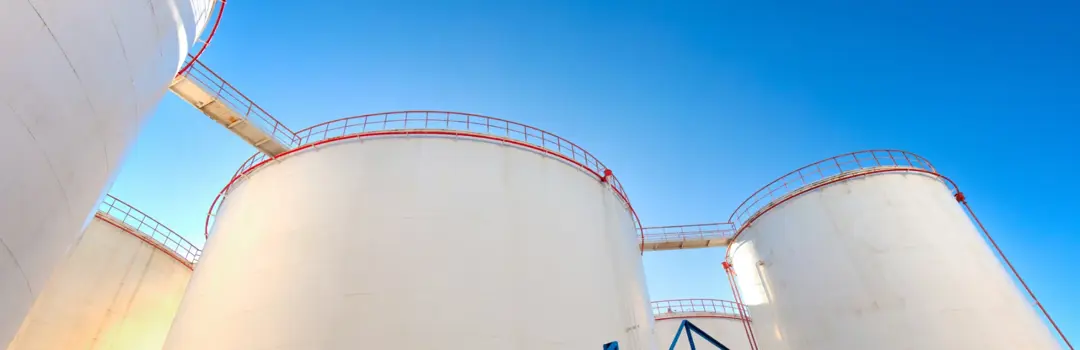
With close to 12 million barrels of storage capacity and growing, the ITC Deer Park terminal is one of the largest and most important bulk liquid storage facilities in the world.
What Storage Terminals Actually Do
A petroleum storage terminal is not a refinery. It does not process or transform raw materials into finished products. It does not crack molecules, remove sulfur, or distill crude oil. A storage terminal receives products that have already been manufactured, holds them in large aboveground tanks, and distributes them when needed.
This distinction matters because it shapes everything about how these facilities operate, from the types of equipment on-site to the safety and regulatory framework that governs them.
Terminals exist because production and consumption rarely happen at the same time or place. A refinery may produce gasoline around the clock, but demand fluctuates by season, region, and even the day of the week. A chemical plant may manufacture a product in batches, but the customer needs a steady supply. Terminals hold products to fill these timing gaps. In addition to storage, they handle blending, where different grades or formulations of a product are mixed to meet customer or regulatory requirements. They also provide the physical infrastructure (docks, pipelines, or rail connections) that allow products to move from one form of transportation to another.
About the ITC Deer Park Terminal
Intercontinental Terminals Company (ITC) is a terminal services company headquartered in Deer Park, Texas, owned by the Japanese conglomerate Mitsui & Co., Ltd. ITC was founded on February 24, 1972, originally as a joint venture between Mitsui and a private owner.
The company started small. ITC’s original footprint was just 11 acres on an inlet of Tucker Bayou, next to an existing chemical facility. In 1974, the company purchased a dock that it had been leasing, along with a warehouse that had been used to store bagged rice for export. Through a series of acquisitions over the following three decades, including the purchase of 135 acres from Rollins Environmental Services and 27 acres from Global Octane (completed in 2003), the Deer Park facility grew to its current size of approximately 265 acres.
Today, the ITC Deer Park terminal holds approximately 12 million barrels of storage capacity across hundreds of tanks ranging in size from 12,000 to 160,000 barrels. The facility has five tanker berths and 10 barge docks, and it can accommodate up to five ocean-going tankers and 15 barges simultaneously. It is served by the Port Terminal Railroad Association (PTRA) for rail operations and has connections to regional pipeline networks.
ITC also operates a second Houston-area terminal in Pasadena, Texas, which began operations in 2015 and can hold approximately 8 million barrels of petroleum products. The company operates a third-party terminal in Port Allen, Louisiana, and holds a joint venture interest in ITC-Rubis Terminal in Antwerp, Belgium.
Combined, ITC’s four facilities offer a total storage capacity of approximately 20 million barrels.
What the Deer Park Terminal Stores
The Deer Park terminal handles a broad range of products:
- Petrochemical liquids and liquified gases, including methanol, aromatics (such as benzene, toluene, and xylene), butane, butadiene, isoprene, vinyl acetate monomer, and ethanol.
- Petroleum products, including naphtha, gasoline, distillates, fuel oil, bunker oil, and base oils and lubricants.
ITC built the Deer Park facility around the concept that customers with similar product lines could store inventory at a single terminal, and Deer Park is now one of the largest methanol storage hubs in the world.
Although the core of ITC’s business involves storage and logistics, the Deer Park terminal also offers blending, heating, circulation, refrigeration, and vapor control services. The company operates in stainless steel and carbon steel tanks, with some fully refrigerated and semi-refrigerated systems for products that must be stored at controlled temperatures. Products arrive and depart via all five major transportation modes: ocean vessel, barge, pipeline, rail car, and tank truck.
How Terminals Like ITC Operate Day to Day
At a high level, the daily work at a bulk liquid storage terminal revolves around receiving, storing, and moving product. Ships and barges dock at the terminal’s marine facilities and pump their cargo into designated tanks through a network of pipes, valves, and pumps. Pipeline connections deliver products from refineries and chemical plants. Rail cars and tank trucks arrive to load or unload.
Inside the terminal, operators must keep different products carefully separated. Contamination, even in trace amounts, can render an entire tank of material off-spec. Tanks are dedicated to specific products or product families, and the piping systems that connect them are designed to prevent cross-contamination. Before a tank that held one product can be used for another, it must be cleaned and inspected.
Inventory management is continuous. Operators track product levels, temperatures, and quality specifications in real time. Custody transfers, the formal handoff of product ownership between buyer and seller, require precise volume and quality measurements that are independently verified. The financial stakes are significant: a single large storage tank can hold more than 6 million gallons of product.
Marine operations are also substantial. With the capacity to berth five ocean-going tankers and 15 barges at the same time, the ITC Deer Park terminal handles a heavy volume of vessel traffic. Ship loading and unloading at the terminal involves coordinating with vessel crews, harbor pilots, and terminal operators to connect the ship’s cargo systems to the terminal’s piping, open and close the right valves in the right sequence, and monitor the transfer for leaks or pressure anomalies.
Safety at Storage Terminals
Petroleum storage terminals handle enormous volumes of flammable and hazardous materials. The ITC Deer Park terminal alone holds millions of barrels of chemicals and fuels, much of it in large aboveground atmospheric storage tanks.
The primary hazards at a tank farm include vapor accumulation and ignition, tank overfill, equipment failure (particularly pumps, valves, and seals), static discharge during product transfer, and loss of containment from corrosion or mechanical damage. Fires at tank farms can be exceptionally difficult to fight because of the sheer volume of fuel involved and the close spacing of tanks in many older facilities.
March 17, 2019: The ITC Deer Park Terminal Fire
On the morning of Sunday, March 17, 2019, a fire erupted at the ITC Deer Park terminal.
The fire originated in the vicinity of Tank 80-8, an 80,000-barrel aboveground atmospheric storage tank that held a blend of naphtha and butane. According to the U.S. Chemical Safety and Hazard Investigation Board (CSB), a circulation pump connected to Tank 80-8 catastrophically failed, allowing the butane-enriched naphtha to escape. The pump continued to operate, leaking the product for about 30 minutes before it ignited.
Once the fire started, ITC was unable to isolate or stop the release. The fire burned, intensified, and spread to the 14 other tanks located in the same containment area. It burned for three days before it was finally extinguished on Wednesday, March 20.
Fifteen 80,000-barrel tanks were destroyed. The property damage exceeded $150 million.
The environmental impact was severe. The CSB determined that the fire released an estimated 470,000 to 523,000 barrels of hydrocarbon and petrochemical products, firefighting foam, and contaminated water into Tucker Bayou and adjacent waterways, including the Houston Ship Channel. A seven-mile stretch of the channel was closed. Several waterfront parks in Harris County and the City of La Porte were shut down.
The fire did not result in any injuries or fatalities, but the local community experienced serious disruptions. A shelter-in-place order was issued for the entire City of Deer Park at one point. Schools and businesses closed. Air quality monitors detected elevated levels of benzene, a known carcinogen, and subsequent investigative reporting found that potentially dangerous benzene levels lingered in the air for more than two weeks after the shelter-in-place orders had been lifted.
CSB Identifies Five Key Safety Issues
The CSB deployed investigators to the site and spent years examining the incident. Their final report, released in July 2023, identified five key safety issues that contributed to the fire and its escalation.
Five Key Safety Issues
The CSB issued recommendations to ITC, the American Petroleum Institute, OSHA, and the EPA to address the safety issues it identified.
Aftermath & Accountability
In April 2024, the State of Texas and the United States reached a $6.6 million settlement with ITC to resolve claims for natural resource damages under the Comprehensive Environmental Response, Compensation, and Liability Act (CERCLA).
ITC has stated that it has invested more than $50 million in safety and emergency response improvements at the Deer Park terminal since the 2019 fire. These improvements include new central control room alarms, additional gas detection equipment, emergency shutdown valves, and upgraded fire response equipment. The company has also said that its training program for firefighting, hazardous materials management, rescue, and incident response has been updated.
Community response to ITC’s continued operations has been pointed. At a 2023 TCEQ public hearing on ITC’s federal operating permit renewal, dozens of Deer Park residents testified against the permit, citing health impacts from benzene exposure and concerns about another catastrophic event. Investigative reporting by The Texas Tribune and Public Health Watch found that for years before the 2019 fire, federal and state regulators had documented repeated problems at ITC’s tank farm but did little to address them.
The Future of ITC Deer Park
Over the past several years, ITC has continued to invest in the Deer Park terminal. As of late 2025, the company was constructing 13 additional storage tanks at the facility. The company’s stated goal is to build its combined Deer Park and Pasadena terminal capacity to 22 million barrels within the next several years. ITC is also pursuing VPP OSHA Star certification through the OSHA Challenge Program, a voluntary designation that recognizes workplaces with exemplary safety and health management systems.
The investments reflect ITC’s position in a growing market. The Houston Ship Channel is the nation’s number one port in total waterborne tonnage, and the petrochemical corridor that surrounds it continues to expand.
For the Deer Park community, however, the outlook is complicated. The ITC terminal is a significant employer and economic presence, but the 2019 fire left a mark. Workers and residents remember the three days of black smoke over their city’s skyline. They remember the shelter-in-place orders and the benzene readings that followed.
The future of the ITC Deer Park terminal will depend on whether the safety investments and regulatory reforms are enough to prevent another incident.
- Categories