The Geismar Olefins Plant: Its History, the Explosion & New Ownership
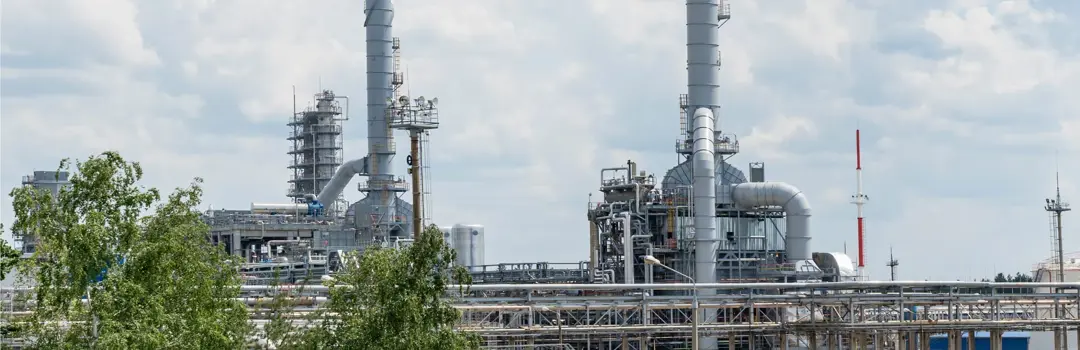
On the morning of June 13, 2013, hundreds of employees and contractors were on the clock for another shift at the Williams Olefins Plant in Geismar, Louisiana. Operators and maintenance workers held a morning meeting like any other day, then went to their assigned work.
At 8:36 am, a reboiler tank exploded. The blast and fire that followed killed 2 workers, injured 167 more, and released an estimated 30,000 pounds of ethylene, propylene, and other petrochemical byproducts into the air above Ascension Parish.
The name Williams Olefins is inseparable from that morning. News coverage of the disaster and years of worker lawsuits that followed made sure of that. More than a decade of safety warnings went unaddressed at the plant before the reboiler failed, and after investigations concluded and the plant returned to operation, Williams sold the facility to NOVA Chemicals.
Today, under a different name and different ownership, the Geismar plant continues to produce billions of pounds of petrochemical products each year and is positioned for significant expansion along the U.S. Gulf Coast.
Williams Olefins Over the Years
Williams Companies traces its origins to 1908, when Williams Brothers was established as a construction firm. Over the following decades, it grew into one of the country’s major pipeline and energy infrastructure companies. By 1967, The Williams Companies purchased what was then the United States’ largest petroleum products pipeline, and in the decade to follow would turn to energy and pipelines, away from its widespread involvement in everything from fertilizer and retail stores to commercial real estate development.
A Closer Look at the Explosion Timeline & Aftermath
The conditions that produced the June 13, 2013 explosion had been building for more than a decade. And then the year before, in 2012, the second, inactive reboiler was filled with nitrogen and its valves were closed off to render it inert, but the valves had leaks, which led to the stable gas being replaced by propane. That same year, an engineering coordinator discovered that the reboiler was missing a pressure relief valve. Multiple plant managers requested a full shutdown to address the hazards, but leadership dismissed the requests.
The day before that fateful morning in June, the plant’s main reboiler was clogged up, as became increasingly apparent as the flow of hot water coming from it kept slowing down. This is what the backup reboiler was intended for, to fill in for the main reboiler as it was serviced. However, on June 13, the operations supervisor wasn’t able to reach the manager to get qualified personnel to resolve the issue.
So the operations supervisor turned on the water valves on the second, standby reboiler at 8:33 am, not knowing that it was no longer inert and was full of propane. How could he have known that management had let this glaring issue go unaddressed for years? He also didn’t know that this reboiler didn’t have a pressure safety valve, again, something that should never have reasonably happened. As the hot water heated up the propane, the pressure reached 1,200 psi, and at 8:36 am, the tank exploded.
The U.S. Chemical Safety and Hazard Investigation Board (CSB) released its findings in 2016, placing responsibility squarely on management. Investigators determined that the plant’s leadership had failed for 12 years to ensure that the reboiler had overpressure protections that worked. Beyond the specific equipment failures, the CSB faulted the facility’s leadership for lacking a process safety culture, inadequate process safety management programs, and poor enforcement of the safety procedures that did exist. The missing relief valve, the undocumented hazards from the 0901 upgrade, the erroneous car seal records, the dismissed shutdown requests: the CSB’s investigation connected each of these failures into a chain of institutional neglect.
Civil litigation followed the disaster, and in 2016, the first two trials concluded in favor of the injured workers. Eight of the injured workers were awarded a combined $30 million in jury verdicts.
What Williams Olefins (Now NOVA Chemicals Olefins) Produces Today
The Geismar plant remains an olefins producer. Its primary output streams are ethylene and propylene. Under NOVA Chemicals’ operation, the facility produces approximately 1.95 billion pounds of ethylene alone, and it produces about 50 million pounds of polymer-grade propylene (PGP) each year. Two co-product streams round out the operations: 14 million gallons of crude butadiene, often ending up as synthetic rubber, and 9.7 million gallons of debutanized aromatic concentrate (DAC), intended for petrochemical products such as gasoline additives and styrene.
What Are Olefins?
Polyolefins are a type of thermoplastic, a versatile plastic manufactured from oil and natural gases. These plastic films and sheets are cost-effective to make and recyclable, useful for all manner of consumer goods and products.
Polyolefins are typically either polyethylene and polypropylene.
No list of applications can fully capture the reach of olefins production. Ethylene and propylene are intermediate chemicals, which means that they are invisible in the finished products that they ultimately become. But they are present in nearly every plastic object in an average home, in the synthetic fibers of clothing, in car dashboards, in food packaging, in medical devices, and so much more.
How the Plant Turns Crude Oil & Natural Gas Into Plastics
The chemical process at the core of this facility is called steam cracking. It is, in essence, the controlled destruction of molecules at extreme temperatures. By heating up molecules that have been sourced from crude oil (like naphtha) and natural gas (like ethane), these molecules can be “cracked” or broken down into the smaller molecules that are then purified, separated, and used to make a wide range of products.
This process needs extraordinary amounts of energy as cracking furnaces and steam hover around 1,500°F. At that heat, the bonds in ethane and propane break apart in less than a second, producing shorter, more reactive molecules, like ethylene, propylene, and butadiene. They need to be cooled off quickly before they degrade further into carbon and hydrogen, then each of the desired products are distilled, separated, and purified. These products then leave the plant by pipeline, barge, or train.
The Future of the Geismar Olefins Plant Under NOVA Chemicals
NOVA Chemicals is a polyolefin producer operating under the Borouge International umbrella, alongside Borealis, which covers European markets, and Borouge, which serves the Middle East. NOVA Chemical’s North American operations span 6 facilities in Canada in Joffre, Alberta and Corunna, Ontario. The Geismar plant is currently its sole U.S. facility. With these facilities, NOVA Chemicals is already established as one of the continent’s biggest producers of polyethylene.
When Williams Partners LP sold this Geismar facility to NOVA Chemicals in 2017, the acquisition included 525 acres of undeveloped land that surrounded the plant. The Geismar site lies approximately 1.5 miles from the Mississippi River. Not only does this provide convenient access to barge transport that includes direct access to the U.S. Gulf, but the location also provides easy access to the feedstocks (like natural gas) that are needed for the plant’s steam cracking. Since many other major players have facilities in that region and in nearby Baton Rouge, like Shell, OxyChem, ExxonMobil, and many others, there is already a specialized workforce to hire from, and it’s a region that will keep attracting the kind of employees needed to keep the Geismar plant running. This position within Louisiana’s petrochemical corridor figures heavily in NOVA Chemicals’ long-term business strategy.
While the physical plant is the same as it was during the Williams years, NOVA Chemicals has three safety recognitions and awards from external organizations listed for its Geismar facility since taking over. The 2013 explosion and its aftermath are a fixed part of this facility’s history. That can’t change. With new ownership, however, the facility has the opportunity to turn a new leaf in its safety culture and record. If NOVA Chemicals can truly achieve that, as it continues to supply materials to plastics manufacturing across the U.S. and Canada, it will likely only keep expanding in the years to come.
When petrochemical plant explosions occur, the investigations that follow often reveal years of deferred maintenance, dismissed safety warnings, and institutional failures that companies had every opportunity to correct. Arnold & Itkin represents workers and families in exactly these situations. The firm’s attorneys handle plant and refinery explosion cases, and we have recovered verdicts and settlements against some of the largest energy companies in the country, contributing to a firm record of more than $25 billion on behalf of clients. Arnold & Itkin is based in Houston and takes cases throughout Louisiana, Texas, and nationwide.