Plant & Refinery Explosions Tripled in Frequency from 2018-2022
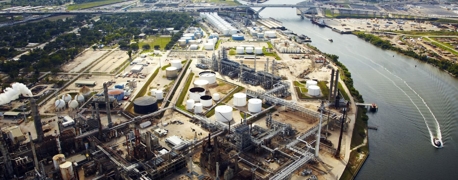
Of the 10 highest-capacity U.S. refineries, 7 are located in Texas or Louisiana. These states provide much of the hydrocarbon people use nationwide, which is why those industries feature so heavily in our work. Our firm recently started researching industry trends to better understand where the industry is going.
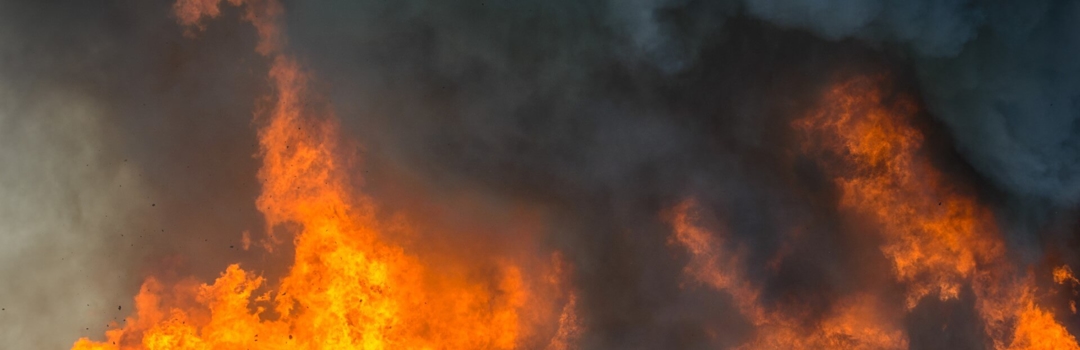
In a startling revelation, existing data indicates a threefold increase in fires and explosions at oil, gas, and petrochemical plants in Texas and Louisiana between 2018 and 2022 compared to the previous five years. In a nation where the average refinery has seen four decades of wear and tear, this trend is not just an alarming statistic—it’s a ticking time bomb with devastating consequences.
Aging Infrastructure Increases Risk of ‘Losses’
A 2020 report on the hydrocarbon industry shows that ‘loss’ frequency—a euphemism for property damage caused by fires, explosions, chemical spills, and other accidents—forms a “bathtub curve.” When a facility is new, accidents occur due to operational errors or lack of procedural familiarity. These accidents decrease over time until they hit a sudden spike after a facility has been around for 30 years, when a facility starts to age. At these plants, failure of mechanical integrity accounts for 65% of losses.
The issue becomes clear once you know the average age of a refinery in the United States is 40 years old. The average age of the largest refineries—which account for most hydrocarbon production—is far older.
Here’s when the seven largest refineries in Texas and Louisiana were built:
The EIA reports that the last refinery with “significant downstream unit capacity”—the Marathon facility in Garyville, LA—came online in 1977, which means most large-scale oil-and-gas production in Texas and Louisiana happens at refineries between 81 and 124 years old. Of all the plants listed above, only two were built after the beginning of the second World War.
The Hidden Scars: Human Consequences
Most of these incidents inflict more than just structural damage—they result in life-altering injuries with lifelong psychological, physical, and social consequences. Burns can often leave victims jobless, isolated from family and friends, and unable to enjoy life as they once did. Companies that neglect maintenance not only jeopardize facilities but also make it more likely for thousands of workers to experience catastrophic injuries, such as full-thickness burns, loss of hearing or vision, loss of a limb, and more.
The solution to these issues is simple: scheduled inspection and maintenance would ensure the facilities’ mechanical integrity. Unfortunately, refineries find reasons to defer much-needed maintenance, whether riding high on profit margins or scraping by during lean times. High profits lead to an “if it’s not broken, don’t fix it” attitude, while low profits present maintenance as an unjustifiable cost. Both scenarios set the stage for the inevitability of mechanical failures, thereby exponentially increasing the risk of incidents.
Only Money Talks
For refineries to consider substantial investments in maintenance and safety, the cost of inaction must outweigh the benefits of the status quo. Significant civil judgments against big players in the industry can tip the scales. As long as failing to invest in safety remains cost-effective, nothing will change.
The tide can only turn if legal consequences make neglect an expensive proposition for companies.
Our analysis shows that aging oil and gas refineries in Texas and Louisiana are ticking time bombs, with the frequency of catastrophic incidents escalating at an alarming rate. These accidents will persist unless preventive measures are implemented immediately. Legal action that imposes heavy civil penalties can catalyze real, lasting change in the industry.
The time to act is now, or else we gamble with human lives and environmental integrity.
Fires and explosions at aging refineries in Texas and Louisiana have accelerated sharply in recent years, and the workers caught in these incidents face some of the most devastating injuries in any industrial setting: full-thickness burns, amputations, and permanent hearing or vision loss. Arnold & Itkin’s Texas refinery accident attorneys have built a record representing workers harmed when companies defer the maintenance that prevents these disasters, recovering more than $20 billion in verdicts and settlements since 2004. The firm handles plant and refinery cases across Texas, Louisiana, and nationwide, taking on the largest energy companies in the country.